


Moves
- Flip the category’s emotional code
- Marketing moves into the product brief
2026 rank
Who Gives A Crap, rank 5
- Rival 50 Score
- 3.97
- Differentiation
- 4.33
- Relevance
- 4.0
- Talkability
- 3.93
Growth signalUK turnover up 17% to £45.5 million in the year to June 2024; more than $20 million donated to clean water and sanitation.
Who Gives A Crap made toilet paper worth talking about by delivering it to the door. In the supermarket, where nobody unboxes anything, the joke has to work on the front of a pack.
Nobody chooses a toilet paper brand. People grab whatever’s soft enough and cheap enough, and the category sells to them accordingly: puppies, clouds and the occasional cartoon bear. Who Gives A Crap turned the most forgettable product in the house into one people talk about. It started with a stunt that summed up the brand. In 2012, co-founder Simon Griffiths sat on a toilet in a warehouse and refused to get up until pre-orders covered the first production run. Fifty hours later, he’d raised more than $50,000.
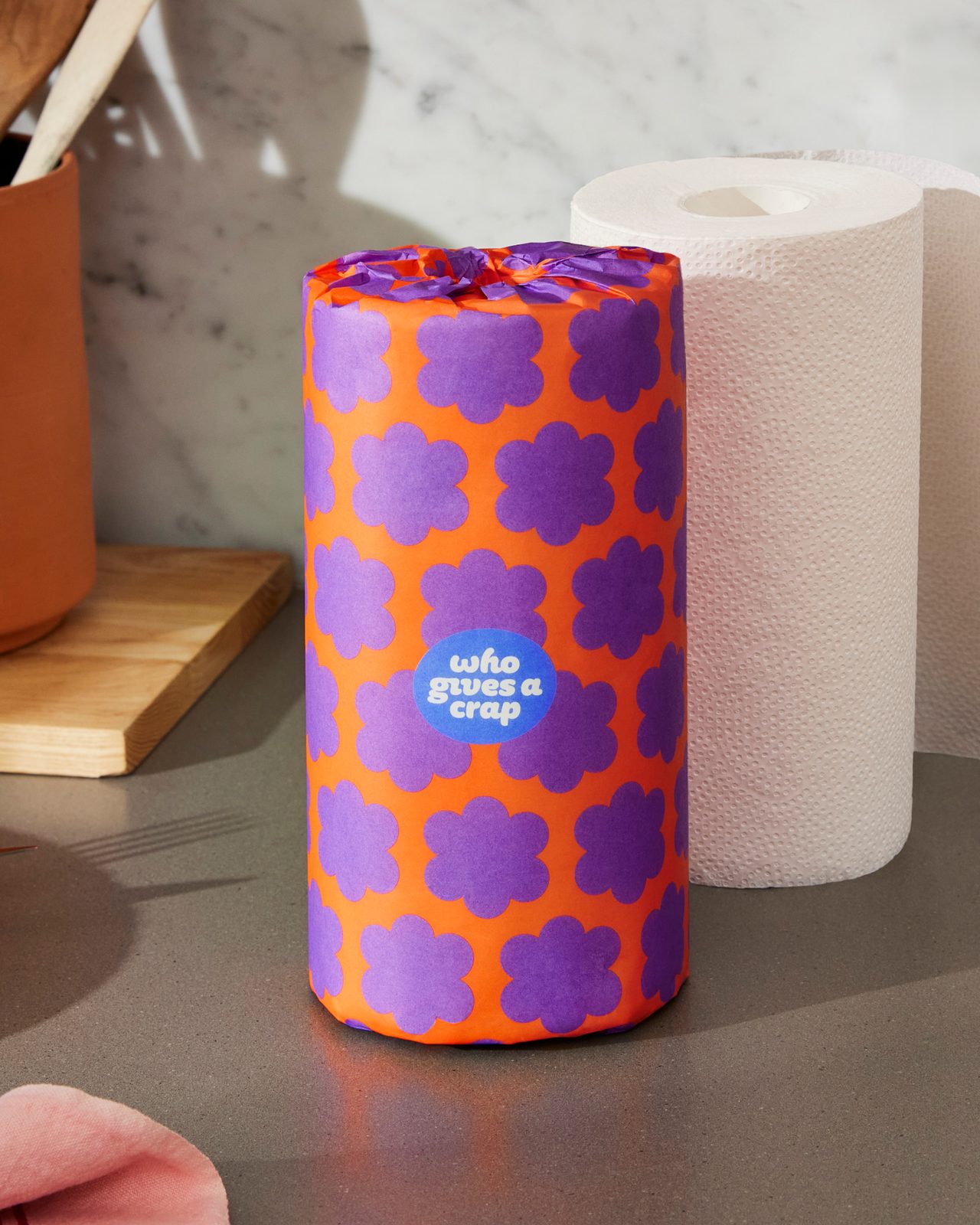
The joke opened the door, but the operating model is what makes Who Gives A Crap different. Half of its profits go to clean water and sanitation projects: not a percentage of sales or a one-off donation, but half of what the business makes. Instead of fighting for shelf space, it built a direct-to-door business, shipping bulk boxes of rolls straight to customers’ homes, often on subscription. The products are made from recycled paper or bamboo, and every roll comes wrapped in paper rather than plastic, in bright prints that turn a household staple into something worth unpacking. The humor, the mission and the model reinforce each other: the name gets attention, the giving gives the joke a reason to exist, and the delivery box puts the brand in people’s homes every few months.
Scoring
Differentiation
Score 4.33
The category default: sell reassurance. Softness, strength and value, in near-identical packs.
What Who Gives A Crap did: built the cause into the business model and wrapped it in a joke. Half of its profits go to sanitation projects, and the brand’s name, tone and printed wrappers make that mission impossible to miss.
So what: in a category where one roll is much like another, personality and purpose are the only real points of difference, and Who Gives A Crap owns both. The humor makes the cause approachable; the cause gives the humor a reason to exist.
Relevance
Score 4.0
The category default: a charity milestone gets a press release and a big, abstract number.
What Who Gives A Crap did: marked $20 million in donations in July 2026 with “Thank You for Giving a Crap,” which included 84 consecutive posters along Swan Street in Melbourne naming all 847 local customers who had helped get there.
So what: most people are skeptical of corporate giving. A neighbor’s name on a wall is harder to dismiss than a headline figure. The posters gave customers proof that their purchases mattered, and the pun kept it unmistakably the brand’s own.
Talkability
Score 3.93
The category default: a product people grab on reflex, with no reason to look twice.
What Who Gives A Crap did: launched “Feel Good Toilet Paper” in the UK in 2026, sending a giant talking toilet roll onto the streets of Bristol and Manchester to hand out compliments and free samples.
So what: a giant roll of toilet paper paying people compliments is impossible to ignore and easy to share. It turned the least glamorous product in the house into a street event.
Our take
Who Gives A Crap already owns a media channel most brands would pay for. Every roll arrives in a printed wrapper, so every delivery puts the brand straight into someone’s home. Limited editions and collaborations change the wrapper the way a magazine changes its cover, and customers reuse the wrappers as gift wrap. Run deliberately as a series, the packaging becomes a publication no competitor can buy its way into.
That advantage disappears in the supermarket. As the brand moves into Whole Foods in the US and Tesco in the UK, it loses the unboxing, the wrapper reveal and the subscription habit. A shopper gives the shelf a few seconds and the front of a pack. That’s where the brand’s next challenge lies: compressing a personality built on the doorstep into a pack that has to win in the aisle, next to products that have been chosen out of habit for decades.
Marketer takeaways
-
1. BUILD THE BELIEF INTO THE BUSINESS, THEN LET HUMOR CARRY IT.
The jokes work because there’s a real commitment behind them.
-
2. SHOW CUSTOMERS THEIR IMPACT.
Naming 847 people on a street did more than another big number ever could.
-
3. TREAT PACKAGING AS A PUBLICATION.
A wrapper that reaches every customer at home is a media channel. Run it like a series.
-
4. MAKE SURE THE BRAND SURVIVES WITHOUT ITS BEST MOMENTS.
Retail removes the context that built the brand, so it has to work in a few seconds on a shelf.
Advisor commentary
Tom Denford, a Rival 50 2026 advisor, sees Who Gives A Crap cleverly trying to own an unfashionable category —
“arguably the only challenger brand within it.”

Tom Denford CEO ID Comms
Reviewers’ view
Reviewers credited Who Gives A Crap with funny, memorable advertising that is easy to talk about and vibrant, whimsical packaging made for display. They also praised its purpose-led stand in a commodity category, donating half its profits and using bamboo.