


Moves
- Marketing moves into the product brief
- Design for disagreement
2026 rank
Tony's Chocolonely, rank 9
- Rival 50 Score
- 3.9
- Differentiation
- 5.0
- Relevance
- 4.7
- Talkability
- 3.47
2025: #47
Growth signalRevenue up 20% to €240 million in the year to September 2025, with US revenue up 50%.
Tony’s takes on the chocolate industry with its marketing while helping to fix it through its sourcing program. Doing both at once is its biggest balancing act.
Most chocolate brands sell a moment of pleasure and stop there. Tony’s, a Dutch brand founded in 2005, wants people to think about what that pleasure costs the farmers who grow the cocoa. Its whole identity is built on a fact the industry would rather not talk about: chocolate is a highly profitable business, yet poverty, child labor and deforestation are still common in its supply chain.
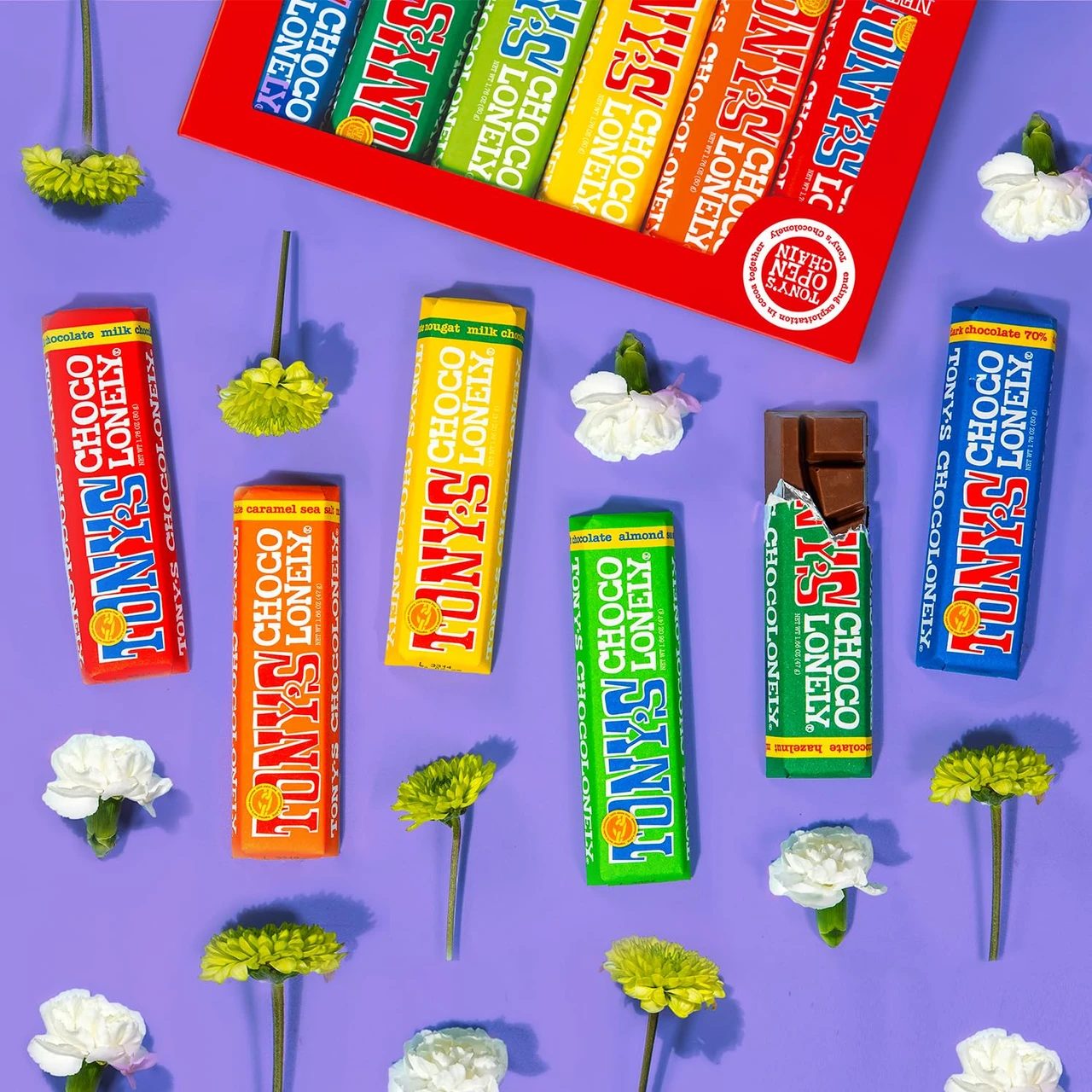
Tony’s makes that problem hard to ignore. Its bars are divided into unequal pieces to represent the unequal way money is shared along the supply chain. Its bright, bold wrappers stand out on any shelf. Neither choice is decoration. Both keep the issue in front of shoppers, even when they’re just buying a treat.
Scoring
Differentiation
Score 5.0
The category default: chocolate brands use color to signal comfort and indulgence, and protect it for decades. Milka’s soft purple is the classic example.
What Tony's Chocolonely did: chose red for the opposite reason. Since its first bar in 2005, Tony’s has used red as a warning sign: the brand calls it “an alarming loud red,” chosen because the chocolate industry’s problems are too urgent for subtlety. In November 2025, it worked with Pantone to make the shade official as “Tony’s Only Red,” then celebrated with a one-day pop-up in Soho, London’s red-light district, that played up red’s other meaning: pleasure.
So what: most brand colors say one thing. Tony’s red says two. It’s an alarm about exploitation in cocoa and an invitation to indulge, the same tension that runs through everything the brand does. Competitors can choose a color, but they can’t easily choose one that carries a mission. Behind the red sits a sourcing model that pays farmers more, traces where cocoa comes from and monitors for child labor, which Tony’s openly invites competitors to copy.
Relevance
Score 4.7
The category default: brands announce their good intentions, and shoppers respond with skepticism.
What Tony's Chocolonely did: ran its first-ever TV campaign in February 2026. “There’s Fight in Every Bite” shows cocoa exploitation as a wrestling match between Tony and an opponent called X-Ploitation. Tony’s didn’t pay for the £500,000 of airtime; it won it through Sky’s Zero Footprint Fund.
So what: a supply-chain problem most people never see gets a face and a body to fight. For the first time, Tony’s reached a mass TV audience, without paying for the media and without softening its message.
Talkability
Score 3.47
The category default: cause marketing is serious and kept separate from the fun of the product.
What Tony's Chocolonely did: teamed up with artist CJ Hendry on a three-day pop-up in New York selling $1 mystery boxes, so buyers didn’t know which chocolate they’d get until they opened them.
So what: the mystery box makes the brand’s point in a playful way. In the cocoa industry, shoppers usually can’t see what’s behind what they’re buying. In Tony’s box, the only surprise is the flavor.
Our take
Tony’s runs two strategies at once. Its marketing takes on the industry head-on. When it made lookalike bars in Milka’s signature purple to make a point about cocoa sourcing, Milka’s owner, Mondelēz, took legal action. Meanwhile, its Tony’s Open Chain program gives other companies a blueprint for cleaning up their own cocoa sourcing. It’s confronting the industry and collaborating with it at the same time.
That combination is what makes Tony’s distinctive, and it’s also its biggest risk. The louder its marketing gets, the more closely people examine its own supply chain. As Tony’s grows, especially in the US, it has to keep proving that its sourcing delivers real progress, not just a good story. A memorable wrapper gets attention, but it doesn’t prove anything. Tony’s greatest achievement is refusing to make shoppers choose between enjoying chocolate and caring how it’s made.
Marketer takeaways
-
1. MAKE THE MISSION VISIBLE, NOT JUST READABLE.
A strong visual like the unequal bar communicates the belief before anyone reads a word.
-
2. GIVE A HARD SUBJECT A WAY IN.
Entertainment works when it makes a serious problem easier to understand, not easier to ignore.
-
3. LET COMPETITORS COPY THE PART THAT MATTERS.
Sharing your solution can spread your mission further than keeping it to yourself.
-
4. MAKE SURE THE BUSINESS BACKS UP THE MARKETING.
A purpose-led brand earns the right to be loud only when its sourcing supports its claims.
Reviewers’ view
Reviewers credited Tony’s Chocolonely with a distinct social justice position in mass-market chocolate, a signature typeface and color palette, and stance-taking that drives talkability. They also pointed to its billboard declaring there is no such thing as free chocolate.